














Gojek Clone App Development in 2025: Features, Cost & Tech Stack
Explore Gojek Clone App Development in 2025—discover key features, cost insights, and the ideal tech stack to launch and scale your multi-service super app successfully.

Gojek Clone App Development in 2025: Features, Cost & Tech Stack
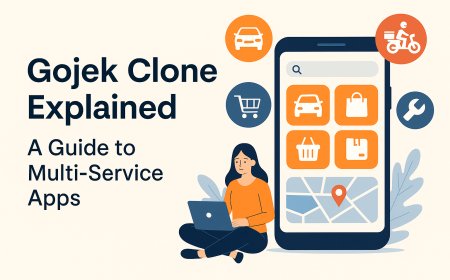
The demand for super apps is skyrocketing in 2025 as users increasingly prefer convenience, speed, and all-in-one digital solutions. Inspired by Gojeks success, startups and enterprises are turning to Gojek clone app development to build powerful multi-service platforms that serve everything from ride-hailing to food delivery, courier services, and beyond.
Building a Gojek clone app is no longer just about copying a feature setits about delivering seamless, scalable, and locally relevant services across multiple verticals. In this guide, well walk through the essential features, cost considerations, and the ideal tech stack to help you successfully develop a Gojek clone app this year.
Why Build a Gojek Clone App in 2025?
The Gojek model solves a key pain point: users want everything in one place. From transportation and logistics to groceries and home services, customers dont want 10 different appsthey want one. This trend has made multi-service platforms a profitable business model for both startups and established companies.
A well-developed Gojek clone app allows you to:
- Enter multiple on-demand service markets simultaneously
- Reduce operational costs by managing services from one backend
- Offer flexible monetization options through various verticals
- Achieve higher user engagement and retention
Essential Features of a Gojek Clone App
The success of a super app lies in how well it integrates services and simplifies user interaction. Below are the core features you need to include in your Gojek clone platform:
For Customers
- Multi-service access from a single dashboard (ride-hailing, food, courier, etc.)
- Real-time tracking for rides, orders, or service providers
- In-app wallet with multiple payment gateway integration
- Service scheduling and booking history
- Ratings and reviews for each service
- Push notifications for service updates and promotions
- Multi-language and multi-currency support
For Service Providers
- Profile management and service availability settings
- Real-time job notifications
- GPS navigation and route optimization
- Earnings dashboard and transaction history
- Customer chat support
- Document verification module
For Admin Panel
- User and provider management
- Service pricing and commission control
- Real-time analytics and reporting
- Content management system (CMS)
- Promo code and loyalty management
- Geofencing and region-specific service control
Each module must be built with scalability and intuitive UX in mind to ensure fast adoption and long-term usability.

Gojek Clone App Cost in 2025
The cost of Gojek clone app development varies depending on the number of services, level of customization, and technology used. Heres a rough breakdown:
|
Development Scope |
Estimated Cost (USD) |
|
Basic MVP (23 services) |
$10,000 $20,000 |
|
Mid-Level App (57 services) |
$20,000 $40,000 |
|
Fully Customized Super App |
$40,000 $70,000+ |
|
UI/UX Design |
$2,000 $5,000 |
|
Backend Development & API Integration |
$10,000 $25,000 |
|
QA Testing & Deployment |
$3,000 $7,000 |
|
Post-Launch Support (612 months) |
$5,000 $15,000 |
Note: These are indicative costs. Working with a professional clone app development company allows flexibility in choosing between pre-built modules and fully custom builds, helping you manage both budget and time-to-market.
Choosing the Right Tech Stack
Your technology stack directly affects your apps performance, scalability, and cost-efficiency. For 2025, heres a reliable and scalable tech stack to build a Gojek clone app:
Frontend (Mobile & Web)
- Flutter or React Native for cross-platform app development
- Next.js or React.js for admin panel and dashboard UI
Backend
- Node.js for real-time performance and scalability
- Express.js or Laravel for backend APIs and business logic
Database
- PostgreSQL or MongoDB to manage complex datasets
- Redis for caching and faster data retrieval
Cloud Infrastructure
- AWS or Google Cloud Platform (GCP) for scalable deployment
- Cloudflare for CDN and security enhancement
Third-Party Integrations
- Firebase for push notifications and analytics
- Stripe, Razorpay, PayPal for global payment processing
- Twilio for SMS, OTP, and in-app communication
This stack enables rapid development, smooth scaling, and real-time service processingall critical to the super app model.
Read More: Gojek Clone App: Manage All Your Services in One Place
Monetization Strategies for Super Apps
A Gojek clone app offers multiple revenue generation models:
- Service Commission: Take a percentage from each completed transaction
- Featured Listings: Charge vendors for premium placement
- Surge Pricing: Increase prices during peak demand
- Ad Placement: Show targeted in-app ads for additional revenue
- Subscription Plans: Offer loyalty programs or priority access
- In-App Wallet Fees: Charge top-up or withdrawal processing fees
By combining various monetization channels, you can diversify income and increase profitability over time.
Challenges to Prepare For
Like any digital venture, Gojek clone development has challenges. Here's what you need to anticipate:
- Complexity in managing multiple services with real-time tracking
- Scalability issues if infrastructure is not optimized from the start
- User trust and data privacy concerns in new markets
- Ensuring service provider onboarding across regions
- Maintaining app performance across Android, iOS, and web platforms
Addressing these challenges earlyby partnering with experienced developers and planning scalable architecturecan prevent major roadblocks after launch.
Why Startups Prefer the Gojek Clone Model
Time and budget constraints make custom app development difficult for startups. With a Gojek clone app, startups get:
- Faster time to market (48 weeks)
- Lower development and operational cost
- Ability to launch with minimum viable services and scale gradually
- Proven business logic and monetization models
- Pre-built integrations for payments, maps, SMS, and more
This model allows businesses to focus on branding, market fit, and user acquisition while the technical foundation is taken care of.
FAQs
How long does it take to develop a Gojek clone app?
With pre-built modules and minimal customization, it can take 48 weeks. For full customization, expect 34 months.
Can I launch in multiple countries with a single app?
Yes. With multi-language, multi-currency, and region-based services, a single Gojek clone can operate in several markets.
Do I need separate apps for Android and iOS?
Not necessarily. Using frameworks like Flutter or React Native enables cross-platform development with a single codebase.
Is it legal to use a Gojek clone?
Yes. A clone app replicates the model and functionalities, not the brand. As long as you create unique branding and UX, it's fully legal.
Whats the best way to scale the app post-launch?
Start with 23 services, monitor demand, and gradually expand. Use analytics tools to understand user behavior and optimize accordingly.
Conclusion
In 2025, developing a Gojek clone app is one of the smartest ways for startups and enterprises to enter the growing on-demand economy. With the right features, tech stack, and business strategy, your super app can serve a wide audience, generate multiple revenue streams, and scale quickly across regions.
Collaborating with a skilled clone app development company ensures a strong foundationallowing you to focus on branding, growth, and customer experience while leaving the technical heavy lifting to experts.